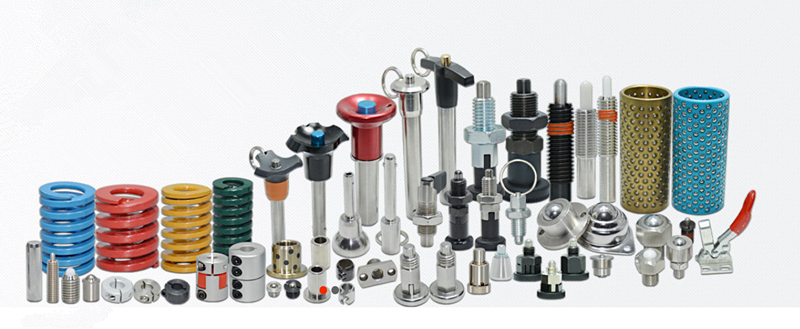
TL;DR — A ball lock pin is the most common type of quick release pin. Spring-loaded balls at the tip lock behind a plate and release the instant you pull the handle. This guide covers how the mechanism works, single vs double acting, heavy-duty versions, how they differ from plain quick release pins, and what to look for in a manufacturer.
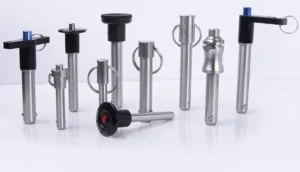
A ball lock pin is the workhorse of the quick release family. If you have ever pulled a hitch pin, secured a fixture, or latched a panel that needed tool-free release, you have probably used one. The genius is in the tip: two or more steel balls that pop out behind the material and hold the pin in place until you pull the handle back in.
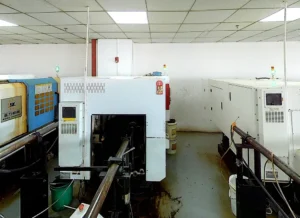
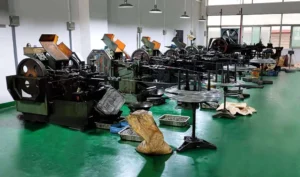
We have manufactured ball lock pins in Shenzhen since 2016 and shipped them to buyers across the US, Canada and Europe. This guide explains the part the way an engineer specifying it needs to hear it.
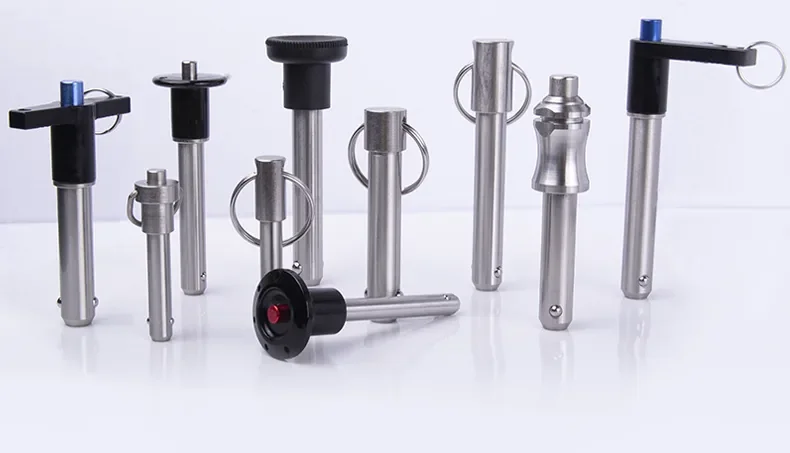
What Is a Ball Lock Pin?
A ball lock pin is a quick release pin whose locking element is a set of radial balls near the tip. A spring pushes a plunger that forces the balls outward. When the pin is inserted through a hole, the balls retract, then spring out past the far face and capture the material. Pulling the handle retracts the plunger, the balls sink, and the pin slides free.
The result is a positive mechanical lock with no cotter pin, no thread, and no tool required to remove it.
How a Ball Lock Pin Works
The mechanism has four parts working together:
- A compression spring inside the shank.
- Locking balls seated in radial holes at the tip.
- A plunger, or spindle, linked to the handle.
- The handle or button that drives the plunger.
At rest, the spring pushes the plunger forward, which cams the balls outward. Press the handle and the plunger pulls back, letting the balls drop into their seat so the pin clears the hole. This is covered in detail in how a ball lock pin works.
Single Acting vs Double Acting
The biggest design fork is how the lock is released:
- Single acting — one handle releases the balls at the tip. Simple, cheaper, fine for almost every panel and fixture.
- Double acting — a second mechanism lets you release the balls from the opposite end, or lock and unlock both ends. Used where you cannot reach the tip, or where you need to retain both sides.
Our single acting vs double acting lock pin guide walks through when the second action earns its cost.
Heavy Duty Ball Lock Pins
When the load climbs, a standard pin is not enough. Heavy duty ball lock pins use a larger shank, stronger spring, and often a solid or welded handle to resist shear and repeated shock. They are the right call for construction equipment, trailers, and anything that sees vibration or side load.
| Feature | Standard | Heavy duty |
|---|---|---|
| Shank diameter | Standard series | Up-sized |
| Spring force | Moderate | High |
| Handle | Wire or formed | Solid, welded |
| Typical use | Panels, fixtures | Equipment, trailers |
Ball Lock Pin vs Quick Release Pin
The terms get used interchangeably, and that is usually fine, but there is a distinction. Quick release pin is the function; ball lock pin is the mechanism. A pin can be a quick release pin without using balls (some use detent grooves), but most on the market are ball lock. Our ball lock pin vs quick release pin article clears up the overlap so you spec the right one.
Choosing a Ball Lock Pin Manufacturer
Because the lock lives in the tip, manufacturing quality is everything. A ball lock pin manufacturer should be able to show you:
- Material certificates for the shank and the balls.
- Spring force and ball-protrusion specifications, not just a diameter.
- First-article inspection on custom runs.
- A factory, not a trading desk forwarding someone else’s email.
Ask for a sample and measure the ball protrusion yourself. If the supplier cannot tell you the spring rate, they are buying the pins, not making them.
Frequently Asked Questions
Can a ball lock pin be used as a load-rated pin? Yes, with a tested shear rating. The shank diameter and material set the capacity; ask for a shear test report.
What holds the balls in if the spring fails? In a well-made pin, a secondary retention keeps the plunger captive. Spring fatigue is the failure mode to watch, which is why cycle rating matters for repeated-use applications.
Are ball lock pins reusable? Yes, for thousands of cycles under normal load.
Can I specify a custom grip length and handle? Yes. Grip length, handle style, material and finish are all standard custom options from an OEM factory.
Talk to a Factory That Makes Them
We have built ball lock pins in Shenzhen since 2016, with material certs, QC reports, and engineers who read your drawing before quoting. Contact us with your specs and we will sample and quote the part directly.